

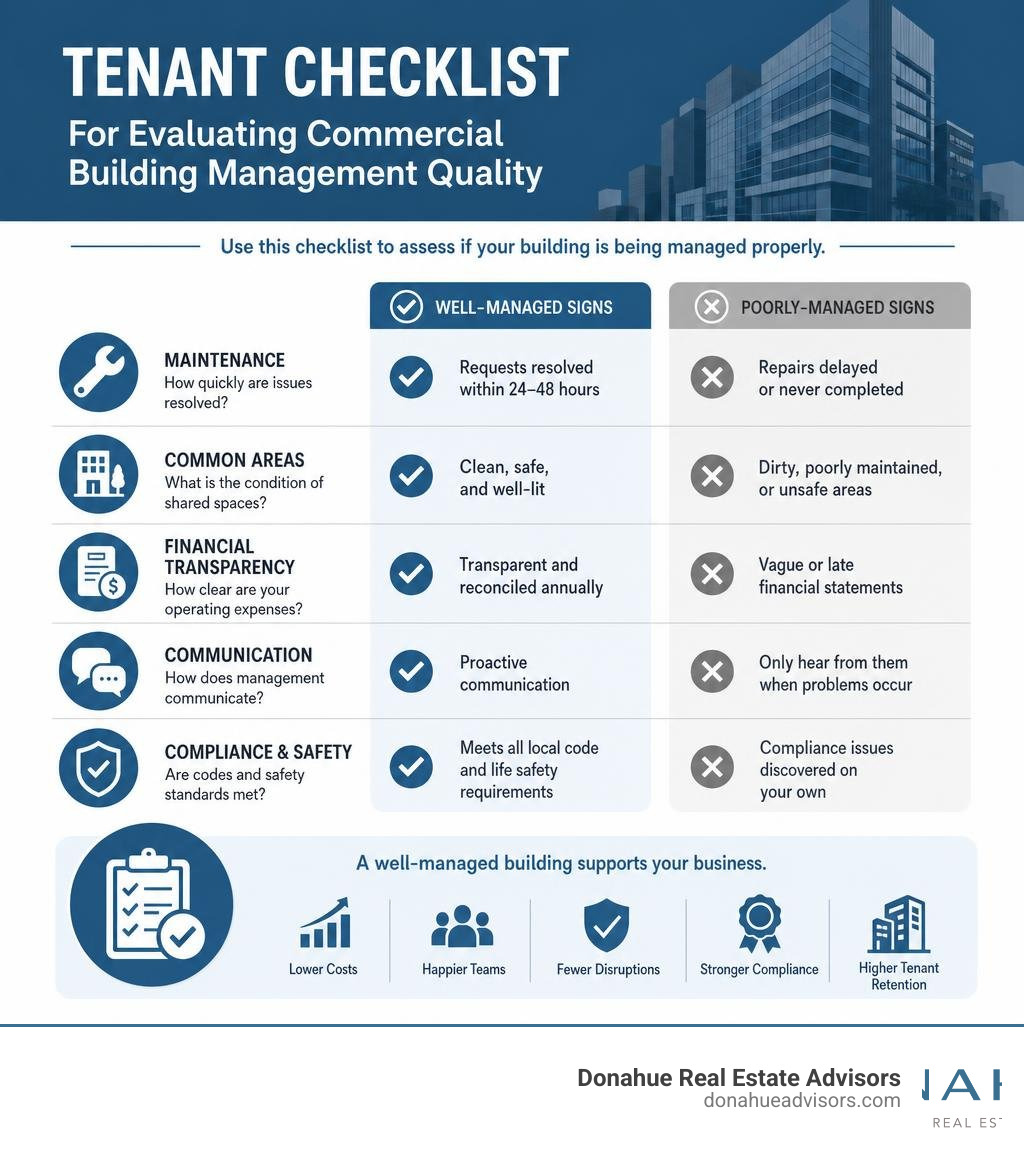
If you’re asking is my building being managed properly, here is a quick way to check:
Signs your building is well-managed:
- Maintenance requests are resolved within 24 to 48 hours
- Common areas are clean, safe, and well-lit
- Operating expenses are transparent and reconciled annually
- You hear from your property manager proactively, not just when something goes wrong
- The building meets all local code and life safety requirements
Signs your building is poorly managed:
- Repairs are delayed or never completed
- You receive vague or late financial statements
- Tenant turnover in your building is high
- You are discovering compliance issues on your own
- HVAC, plumbing, or electrical problems keep recurring
For Pittsburgh businesses weighing a lease renewal against a potential relocation, this question matters more than most leaders realize. Office vacancy across Pittsburgh submarkets including the Strip District, East End, and Oakland remains elevated, giving tenants real leverage. Yet many businesses are still locked into leases in buildings where deferred maintenance, poor communication, and rising operating costs quietly erode productivity and profitability every month.
Poor building management is rarely one dramatic failure. It is a pattern of small, compounding problems: a slow response to a broken HVAC unit, a CAM charge that does not add up, a compliance issue nobody flagged until it became urgent. Left unchecked, those problems affect your team’s daily experience, your operating budget, and your ability to attract and retain talent.
At Donahue Real Estate Advisors, with more than 30 years representing tenants across Pittsburgh’s commercial real estate market, we have seen how a poorly managed building can undermine a business’s growth. Throughout this guide, we will walk you through exactly how to evaluate whether your building is being managed properly and what your options are if it is not.
Is My Building Being Managed Properly? The Impact on Your Business Operations
When evaluating whether your office environment supports your business goals, you must look closely at how the property is run on a daily basis. In competitive Pittsburgh submarkets like the East End, Shadyside, East Liberty, Oakland, the North Shore, the Southside, and the Strip District, the quality of your physical workspace plays a massive role in your operational efficiency.

A poorly managed building directly impacts your bottom line. If your clients arrive at a building with an elevator that is constantly out of service, a dirty lobby, or inadequate climate control, it damages your brand before they even walk through your front door. Internally, business productivity suffers when employees must deal with drafty offices, flickering lights, or slow internet connectivity due to outdated building infrastructure.
Understanding the health of your landlord tenant relationship is a critical starting point. When you sign a lease, you are entering into a long-term partnership. If the landlord or their representative is unresponsive, the partnership is broken. To protect your interests, you must understand the rules of engagement outlined in your agreement. A deep dive into understanding a commercial lease will show you that building services are not just courtesies; they are contractual obligations.
When building management underperforms, tenant retention drops. If you notice other businesses in your building quietly packing up and relocating to other properties in or near Pittsburgh, it is a clear warning sign. High vacancy rates are a strong indicator that other tenants have already answered the question of whether the property is being run correctly.
Key Performance Metrics of Effective Property Management
Proper building management is not a matter of opinion; it is a matter of measurable data. High-performing property managers use specific key performance indicators to track their own efficiency, control costs, and keep tenants satisfied.
To help you grade your current landlord, we have put together a comparison table highlighting the operational differences between excellent and underperforming property management.
| Metric | High-Performing Management | Underperforming Management |
|---|---|---|
| Leasing Velocity | Vacancies are filled quickly; tenant retention is high; space rarely sits empty. | Spaces sit vacant for months; high tenant turnover; lack of interest from new businesses. |
| Maintenance Backlog | Requests are completed within 24 to 48 hours; preventative maintenance is scheduled. | Requests pile up; repairs are reactive; same issues recur repeatedly. |
| Delinquency & Collections | Consistent rent collection; clear, professional enforcement of lease terms. | Late or inconsistent collections; chaotic record-keeping; sudden disputes. |
| Financial Reporting | Detailed statements delivered each month with clear explanations. | Financial statements are late, confusing, or require constant translation. |
| Compliance Audits | Proactive tracking of local codes, elevator permits, and safety standards. | Reactive response to building citations; missed deadlines; surprise fines. |
The standard of management you should expect often depends on your building’s classification. A building’s tier dictates the level of service, amenities, and maintenance response times that are built into your rental rate. You can learn more about how these properties are categorized in our guide on commercial building classification.
If you are paying premium rental rates for a top-tier space, you should expect flawless common area maintenance, immediate response times, and state-of-the-art building systems. If your building manager is failing to deliver on these basics, you are not getting what you paid for. To understand if your rent matches the physical reality of your space, review our breakdown of Class A vs Class B office space.
How to Tell If Your Building Is Being Managed Properly: Operational Indicators
Operational efficiency starts with a simple metric: response times. When you submit a maintenance request for a plumbing issue, a broken lock, or a climate control failure, how long does it take for a technician to arrive? A high-performing property manager will have a clear, automated ticketing system that confirms receipt of your request and provides a realistic timeline for the repair.
Another major operational indicator is the manager-to-building ratio. In the property management industry, a single manager can typically oversee up to 40 buildings effectively, but this can vary based on the size of the buildings. When a management company overextends its staff, assigning too many properties to a single person, that manager is forced into a state of reactive triage. They can only respond to major emergencies, leaving routine maintenance and tenant requests to pile up. You can read more about the dangers of overextended management in this article on 5 Signs Your Property Manager Has Too Many | Camelot NYC.
A well-managed building also relies on strong, proactive vendor management. The property manager should have a vetted network of local Pittburgh contractors who are held to strict service standards. If the building’s snow removal, landscaping, janitorial services, and elevator maintenance are consistently subpar, it means the manager is not holding their vendors accountable.
Financial Transparency and Auditing Operating Expenses
One of the most common ways commercial tenants are overcharged is through poorly managed operating expenses. If your lease is a Triple Net (NNN) lease or contains a modified gross structure with a base year, you are responsible for paying a portion of the building’s operational costs. This makes financial transparency absolute.
You should receive a detailed reconciliation statement every year showing exactly where your money went. If these statements are late, vague, or contain sudden spikes in costs, it is time to look closer. You must ensure the landlord is not shifting capital expenditures (like replacing an entire roof or installing a brand-new HVAC system) into your operating expenses, which should only cover routine maintenance and repairs.
To protect your business from unexpected financial leaks, we highly recommend reading our guide: Audit Your Way to Savings: A Guide to Lease Operating Expenses.
Without a careful review, you might fall victim to lease cost creep, where small, unauthorized charges are added to your invoice year after year. These charges often hide within common area maintenance (CAM) fees, such as administrative fees, inflated management costs, or redundant service charges.
Red Flags of Poor Property Management and Common Landlord Failures
Identifying a failing property manager early can save your business thousands of dollars and prevent operational disruptions. The most obvious red flag is deferred maintenance. When minor repairs are ignored, they eventually turn into major system failures.
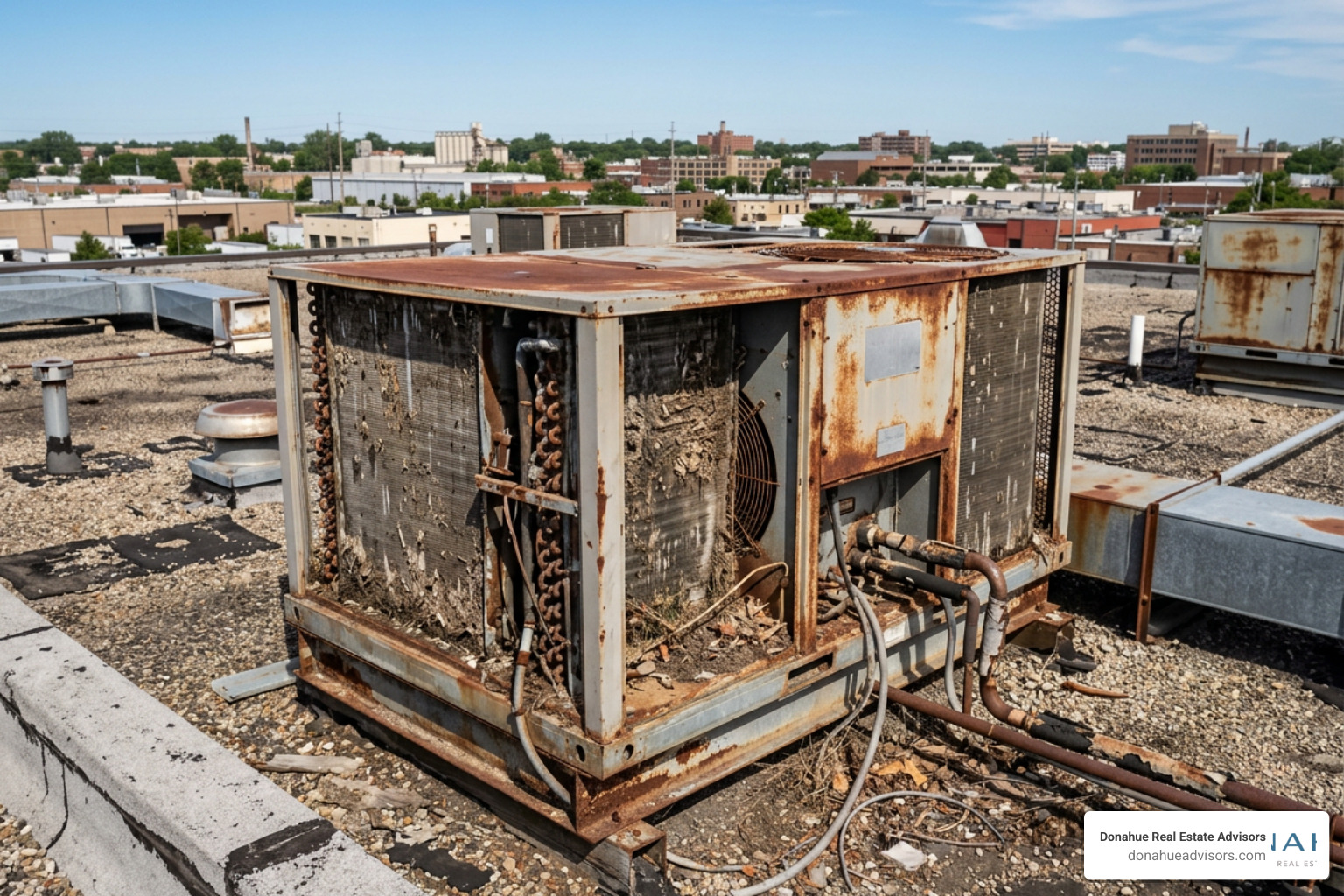
Communication breakdowns are another clear warning sign. If your emails go unanswered for days, or if the property manager only contacts you when rent is due, they are failing at basic tenant relations. This lack of communication often leads to a high tenant turnover rate. If you notice that your neighbors in the building are constantly moving out, or if spaces remain vacant for months on end, it is a strong signal that the building is not being managed properly. These issues can quickly escalate into serious commercial lease issues for tenants.
Is My Building Being Managed Properly? Spotting Maintenance and Compliance Failures
A building manager’s primary responsibility is to keep the property safe, functional, and compliant with all local, state, and federal regulations. A failure in this area is not just inconvenient; it can expose your business to severe legal liabilities.
Key areas of compliance and maintenance failures include:
- Life Safety Systems: Fire alarms, sprinkler systems, and fire extinguishers must be inspected regularly in accordance with NFPA standards.
- Elevators and Vertical Transport: Elevator permits must be up to date, and emergency communication systems must be tested regularly.
- Accessibility: Common areas, entryways, and restrooms must comply with the Americans with Disabilities Act (ADA).
- Environmental Compliance: Older buildings in Pittsburgh must be monitored for lead, asbestos, and proper waste management.
If you want to understand the rigorous standards used by professional inspectors to grade property management, you can review this official document: Management Review for Multifamily Housing Projects. While this document is designed for housing projects, the core principles of safety, security, preventative maintenance, and financial management apply directly to commercial properties.
The Risks of Holdover Rent and Free Rent Timing Mistakes
When building management is poor, tenants often decide to relocate. However, moving a business requires careful planning and precise timing. Two of the most common and costly mistakes we see tenants make involve holdover rent and the timing of free rent concessions.
Holdover rent occurs when a tenant remains in their space after the lease has officially expired. If your new space in the Strip District or Oakland is delayed because of construction or poor coordination, you might be forced to stay in your current building. Most commercial leases contain a holdover clause that penalizes the tenant by charging 150% to 200% of their previous rental rate. This penalty is calculated on a daily or monthly basis, which can quickly drain your operating capital.
Another common mistake involves free rent timing. Landlords often offer several months of free rent as an incentive to sign a new lease or renewal. However, if the lease is not structured correctly, you could lose this benefit. For example, if the free rent is applied during a period when your business cannot fully occupy the space due to construction delays, the financial benefit is lost. Additionally, some leases contain clauses that allow the landlord to claw back your free rent if you commit a minor default later in the lease term.
To avoid these costly traps, it is essential to have a professional commercial lease review before signing any agreement. Strategic planning and early preparation are your best defenses against holdover penalties and concession losses.
Tenant Rights, Legal Protections, and Local Compliance Standards
Commercial tenants do not have the same default protections as residential tenants, but you still have clear legal rights and avenues for recourse when a landlord fails to maintain a building. In Pittsburgh, commercial properties must comply with strict local building codes, safety standards, and occupancy regulations.
If your building manager is ignoring critical structural, safety, or health issues, you can report these failures directly to local authorities. The City of Pittsburgh department of Permits, Licenses, and Inspections enforces building codes and can issue citations to negligent landlords. You can learn more about this process through Code Enforcement – Pittsburgh, PA.
Before signing a lease or committing to a renewal, it is also wise to understand the physical condition of the property. A professional assessment can reveal hidden structural, electrical, or mechanical issues that the landlord has failed to address. You can learn more about these evaluations through Pittsburgh Pennsylvania Property Condition Assessments.
Your lease agreement is your primary legal tool. If you are operating under a NNN lease, you must pay close attention to how maintenance responsibilities are divided. You can read our detailed guide on NNN leases commercial real estate to understand these dynamics.
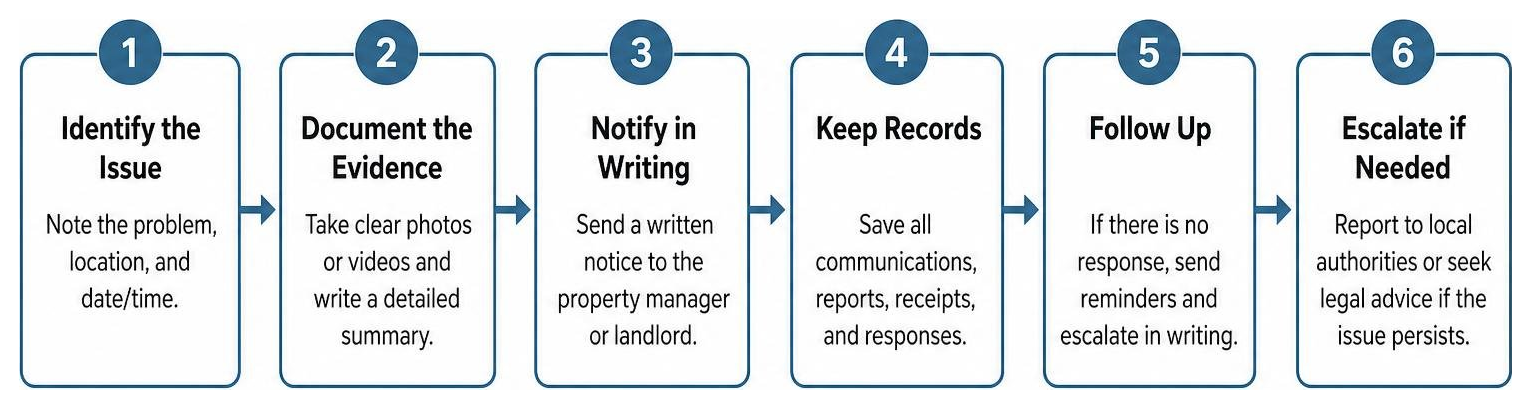
If your landlord defaults on their obligations, you must document the issues carefully. Do not simply stop paying rent, as this can put you in default and lead to eviction. Instead, follow a structured process to establish a clear paper trail for potential legal action.
Frequently Asked Questions about Building Management
What are the immediate signs of an underperforming property manager?
The most immediate signs include a growing backlog of unresolved maintenance requests, delayed or unreturned phone calls and emails, and common areas that are visibly dirty or neglected. Additionally, if you receive late, confusing, or inaccurate financial statements, or if your operating expenses show sudden, unexplained increases, your property manager is likely underperforming.
How do local Pittsburgh codes affect commercial landlord responsibilities?
The City of Pittsburgh requires all commercial buildings to maintain valid occupancy permits, meet strict fire and life safety standards, and comply with regular structural inspections. Landlords are legally required to keep the building’s exterior, structural elements, and common area life safety systems in full compliance with local building codes. Failure to do so can result in code enforcement citations, fines, or the building being declared unsafe for occupancy.
Can a commercial tenant withhold rent for poor building maintenance?
In most commercial leases, tenants do not have an automatic right to withhold rent, even if the landlord is failing to maintain the building. Doing so without following the specific default provisions in your lease can put your business in legal default, exposing you to eviction and financial penalties. If your landlord is neglecting repairs, you must review your lease default clauses, notify the landlord in writing, and, if legally permitted, utilize a formal court escrow account to hold your rent payments until the repairs are completed.
Conclusion
When you are facing a lease expiration and trying to decide whether to renew your lease or relocate your business, evaluating your building’s management quality is a critical step. If you are dealing with deferred maintenance, unresponsive communication, or rising operating costs, staying in your current space may be costing your business more than you realize.
The first step in protecting your business is simple: Partner with Expert Tenant Representation.
At Donahue Real Estate Advisors, we provide conflict-free tenant representation and strategic advisory services to businesses across Pittsburgh. Because we exclusively represent tenants, we have no conflicts of interest with landlords or property management companies. We are dedicated to helping you find the right space, negotiate the best terms, and ensure your building is managed to the highest standards.
To see how we have helped other businesses navigate complex space requirements and lease negotiations, you can read our case studies.
Whether you choose to renew your lease under stronger terms or relocate to a better-managed property in the Strip District, Oakland, or the East End, we are here to guide you through every step of the process. To learn more about how we can support your business, explore our tenant representation services.
Ready to take control of your office environment? Contact us today to schedule a comprehensive lease strategy session.