

Pittsburgh has become a global powerhouse for robotics, AI, and applied technology. The region’s deep technical talent pool, combined with lower operating costs than coastal markets, creates a real competitive advantage for companies building physical products and complex systems. But here’s what many founders miss: your tech office space decisions directly impact how well you can leverage that advantage.
Founders in Western Pennsylvania face different constraints than their counterparts in San Francisco or Boston. Capital efficiency isn’t just nice to have when funding rounds are smaller and farther between. Physical space requirements look completely different when you’re assembling autonomous vehicles rather than shipping SaaS features. A lease you sign today dictates your cash flow and operational flexibility for years. Get it wrong, and you’ve anchored a nimble startup to a liability that drains resources from product development and talent acquisition.
The most effective tech office space strategy prioritizes optionality over optics. Your physical footprint should align with your commercialization timeline, not optimistic hiring projections. This approach preserves capital for R&D while keeping your company agile as you move from prototype to pilot to scale.

1. Overestimating Headcount Growth
Here’s a pattern we see constantly: hiring in tech and robotics rarely happens in a straight line. Growth comes in distinct phases that typically follow funding rounds or major contract wins. But leadership teams keep making the same mistake, signing leases based on best-case linear growth charts.
The result? You’re paying for empty desks and unused square footage for extended periods, sometimes years.
Growth in Pittsburgh’s ecosystem is particularly tied to commercialization milestones. A robotics company might run lean with 15 engineers for two years while perfecting their technology, then suddenly need to triple headcount when they land their first major manufacturing contract. If you signed a five-year lease for that future headcount two years ago, you’ve been burning capital on rent that should have gone into product development. That monthly overage compounds into hundreds of thousands of dollars that could have hired the senior roboticist you actually need right now.
Overcommitting to tech office space also limits your ability to pivot. When a product timeline shifts (and in deep tech, it almost always does) or a funding round takes longer than expected, a large lease becomes a financial drain that restricts your strategic options. The smarter approach? Structure your space to expand only when the demand is immediate and verified. This keeps you lean enough to weather the inevitable uncertainties of hardware development timelines.
Bottom line: base lease commitments on headcount you can verify within the next 12-36 months. The cost of moving or expanding later is almost always lower than the cost of breaking a lease or desperately hunting for subtenants.
2. Overbuilding for “Culture” Instead of Workflow
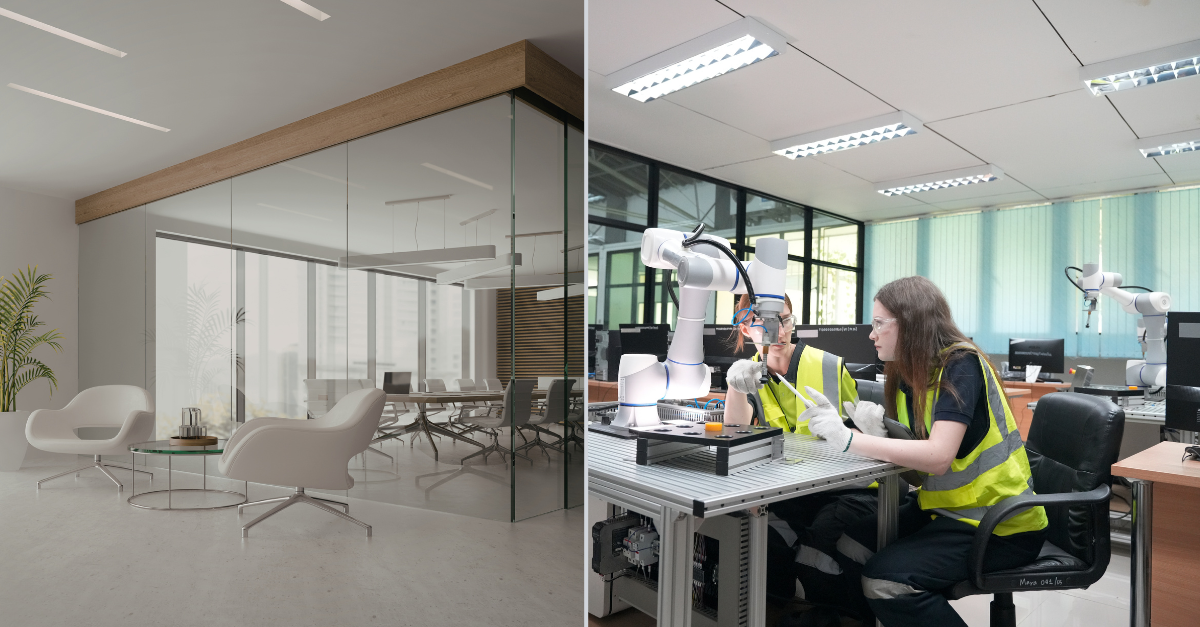
Growth-stage companies often design tech office space around a perceived startup image rather than actual work requirements. The impulse is to build lounge areas, high-end finishes, or rec zones to replicate what they’ve seen in tech company tours or TechCrunch features. But here’s the reality: culture in deep tech and robotics comes from solving hard problems together, not from office perks. Your space needs to support how your engineers and technicians actually work, or it becomes an expensive distraction.
Most Pittsburgh tech companies need blended environments. Quiet zones where engineers can focus on complex code. Collaborative areas for sprint planning and design reviews. Physical labs for hardware testing, often with requirements like heavy power, proper ventilation, and loading docks. A standard office layout with rows of open desks doesn’t cut it. Hardware teams specifically need light industrial capabilities that most Class A office towers simply can’t provide.
Think about the difference between a converted warehouse space in the Strip District versus a renovated office floor Downtown. The Strip District option might give you 14-foot ceilings, 400-amp electrical service, a freight elevator, and industrial HVAC: everything you need to build and test robotic systems.
The Downtown space? Impressive views and a prestigious address, sure. But you’ll spend six figures adapting it for your actual technical requirements. When you prioritize usability over aesthetics, you create an environment that removes friction from the development process. That operational efficiency builds stronger culture than any game room ever could.
The takeaway: base your build-out decisions on verified workflow needs, prioritize functional infrastructure like power distribution and lab space over aesthetic perks, and remember that culture flows from teams doing their best work, not from expensive office amenities.
3. Misjudging Hybrid Work Permanence
Hybrid work in robotics and hardware is structurally different from pure software companies. You can’t assemble a prototype or stress-test a sensor stack from a home office. Physical presence is non-negotiable for certain roles and certain phases of development. But that doesn’t mean every employee needs a dedicated desk five days a week. Many companies still lease tech office space as if 100 percent of their staff will be on-site simultaneously, which creates massive underutilization.
Utilization gaps are a major source of wasted capital. Your engineering team might be in the lab four days a week, while your sales and operations staff only come in for weekly syncs or customer meetings. Leasing a traditional office with a 1:1 desk ratio for every employee ignores this reality. The result? A ghost town effect where half the office sits empty on any given day, yet you’re still paying full rent on that square footage.
The smarter model involves neighborhood-based seating and shared resources. Instead of assigned desks, you create team zones with enough stations for peak occupancy plus a buffer. This lets you lease 20 to 30 percent less total square footage while actually providing better amenities for people who are on-site: better monitors, adjustable desks, more collaborative space. The focus shifts from “my desk” to “my team’s zone,” which better reflects how modern technical teams actually work.

4. Applying Silicon Valley Logic to a Pittsburgh Market
Pittsburgh operates under completely different rules than coastal tech hubs. The labor market here is less transient, which means talent retention strategies rely less on flashy office locations and more on stability, mission, and technical challenges. Commute patterns are also more forgiving. A 25-minute drive is perfectly reasonable here, whereas in San Francisco it would be career-limiting. Applying a Bay Area real estate playbook to Pittsburgh usually means overpaying for unnecessary prestige.
Cost structures in Pittsburgh give you significantly more leverage if you understand the local dynamics. In Austin or Boston, landlords hold most of the cards due to extreme density and competition for limited inventory. In Pittsburgh? Landlords are often eager to attract high-growth tech tenants to diversify their portfolios away from traditional industries. This creates room to negotiate terms that would be impossible in more competitive markets: longer rent abatement periods, more generous tenant improvement allowances, flexible expansion rights.
You don’t need to pay a premium for a “tech-ready” address if a nearby flex-industrial space works better for your technical requirements. A renovated manufacturing building in Lawrenceville or the North Side often provides the high ceilings, loading docks, and three-phase power that robotics teams actually need, at a fraction of the cost of a Class A office tower Downtown.
The whole value proposition of Pittsburgh is the ability to run a capital-efficient business. Paying top-tier office rents for a robotics startup negates one of your biggest geographic advantages. Focus on what the building can do for you, not the prestige of the zip code.
5. Where Pittsburgh Tech & Robotics Companies Still Have Leverage
Many leadership teams leave money and flexibility on the table because they don’t know what to ask for during lease negotiations. Landlords in this region are often willing to offer significant concessions to secure a promising tech tenant, but you have to know which levers to pull.
Expansion and contraction rights are critical negotiation points that directly address the non-linear growth patterns common in deep tech. These clauses let you take additional space if you scale faster than expected or give back space if a major contract falls through, all without breaking the entire lease. For example, you might negotiate the right to expand into the adjacent 5,000 square feet within 18 months at a pre-agreed rate, while also securing the option to contract by 30 percent after year two if your headcount projections change. This flexibility is invaluable when you’re in an industry where a single contract win can triple your workforce in six months.
Phased occupancy is another powerful tool for conserving cash. You might lease 10,000 square feet, but only pay rent on 5,000 square feet for the first year. This aligns your rent expense with your actual usage and growth curve while securing your future expansion space without forcing you to pay for it before you need it. This structure works particularly well when you’re between funding rounds and need to demonstrate disciplined capital management to investors.
Tenant Improvement allowances should go toward technical build-outs, not cosmetic upgrades. Instead of using your TI allowance for glass walls or designer carpet, negotiate for the landlord to cover lab infrastructure costs. Ventilation systems for chemical testing, upgraded electrical panels for high-draw equipment, reinforced floors for heavy machinery. These are expensive capital projects. Getting the landlord to fund these upgrades preserves your equity for operations and product development. In Pittsburgh’s current market, TI allowances of $40 to $60 per square foot are achievable for the right tenant. That’s $400,000 to $600,000 in build-out costs you don’t have to capitalize.
The key insight: negotiate expansion and contraction rights to match your non-linear growth, use phased occupancy to secure future space without paying for it immediately, and direct tenant improvement allowances toward technical infrastructure rather than cosmetics.
6. How to Evaluate Whether Your Current Space Supports Scale
Every leadership team should periodically audit their tech office space to make sure it still serves the business. A space that worked during the seed stage often becomes a bottleneck by Series A or B. This evaluation isn’t just about counting desks. It’s about assessing operational friction and figuring out whether your building is helping you ship product or holding you back.
Start by calculating your real utilization rates. Don’t rely on assigned desks or theoretical capacity. Track actual daily attendance and lab usage over a 30-day period to determine your true peak occupancy. Badge swipe data is the most accurate source for this metric and reveals patterns you might not see through casual observation. If your peak occupancy consistently falls below 60 percent, you’re likely overcommitted on space.
Next, map your workflows to your floor plan. Trace the physical path of your product from initial design through testing to final assembly. Identify bottlenecks where physical space constraints slow down the engineering process. For instance, if your team has to haul hardware up and down stairs between floors, or if your testing lab is on the opposite side of the building from your design team, those logistical inefficiencies add up fast. A well-designed space minimizes the physical distance between interdependent work streams.
Finally, review your lease expiration dates against your product roadmaps and funding milestones. If your lease comes up for renewal six months before you plan to launch a major product or close a Series B, you’ve got a planning problem. Lease negotiations eat up management attention at exactly the wrong time. Ideally, your lease renewal should align with a period of relative stability: after a successful funding round or product launch, not before. Misalignment here creates real financial risk and distraction when you can least afford it.

Conclusion
Growth-stage tech and robotics companies don’t need perfect forecasts to make smart tech office space decisions. You need strategies that can adapt as the business evolves. The Pittsburgh market offers real advantages for companies that know how to leverage them: lower costs, more flexible landlords, and an inventory of industrial-capable spaces that are increasingly rare in other tech hubs.
Your physical environment should facilitate your work, not dictate your budget. The trap to avoid is overbuilding for an aspirational image or locking into rigid long-term commitments based on today’s optimism about tomorrow’s growth. Instead, build a tech office space portfolio that preserves your capital and supports your engineering reality. Base commitments on verified near-term needs. Prioritize functional infrastructure over aesthetic perks. Negotiate for flexibility in both expansion and contraction. Direct tenant improvement dollars toward the technical capabilities you actually need.
In the race to commercialize, flexibility is your most valuable competitive advantage. The companies that succeed in Pittsburgh’s deep tech ecosystem are the ones that treat tech office space as a strategic lever rather than an operational afterthought.
Frequently Asked Questions
How much office space does a robotics company actually need per employee?
Robotics companies typically need significantly more space than pure software firms due to hardware development and testing requirements. While software companies might allocate 125 to 150 square feet per person, robotics firms often need 200 to 250 square feet to account for labs, storage, assembly areas, and equipment staging. But this varies heavily based on what you’re building. A company developing warehouse automation systems will have different spatial requirements than a team building medical robotics devices. Calculate your requirements based on your specific workflow rather than industry averages.
Should early-stage startups sign long-term leases in Pittsburgh?
Generally, no. Early-stage companies should prioritize flexibility over locking in low rates for extended periods. A five-year lease is often too rigid for a company that might pivot, scale rapidly, or need to relocate based on customer proximity. Shorter terms with renewal options or negotiated sublease rights are usually safer, even if the monthly rate is slightly higher. Think of the additional cost as insurance against uncertainty. In Pittsburgh’s current market, landlords are often willing to offer one- to three-year terms with options to extend, which gives you the flexibility to adapt as your business evolves.
What is the difference between rentable and usable square footage?
Usable square footage is the actual space within your suite walls that you can occupy and configure for your operations. Rentable square footage includes a proportional share of the building’s common areas: lobbies, hallways, restrooms, mechanical rooms. You pay for these but can’t use them exclusively. The difference between these two figures is called the load factor or loss factor. In Pittsburgh, this typically adds 15 to 20 percent to your billable space. So if you lease 10,000 usable square feet with a 15 percent load factor, you’ll actually pay rent on 11,500 square feet. Always clarify which measurement is being quoted during lease negotiations.
Can I negotiate for the landlord to build out my lab space?
Yes, and you should. In the current Pittsburgh market, landlords are often willing to provide substantial Tenant Improvement allowances to customize the space, particularly for creditworthy tech tenants who represent portfolio diversification. For robotics companies, negotiate specifically for this allowance to cover technical infrastructure rather than cosmetic upgrades. Electrical system upgrades, industrial ventilation, reinforced flooring for heavy equipment, specialized HVAC. These are all reasonable requests. The key is positioning these improvements as essential to your operations rather than nice-to-have amenities. Landlords understand that attracting and retaining quality tech tenants often requires these investments.
What happens if we outgrow our space before the lease ends?
This depends entirely on what rights you negotiated upfront. If you secured a right of first refusal or an expansion option on adjacent space, you can grow into that area at pre-negotiated terms without the friction of a full lease renegotiation. Without these clauses, your options become more limited and expensive. You might need to sublease your current space and relocate entirely, which involves significant transaction costs, operational disruption, and potential loss of momentum during a critical growth phase. This is exactly why negotiating expansion rights at the outset is so important. The relatively small amount of leverage it costs you during initial negotiations can save you six figures and months of distraction later.
How do I know if a space can handle my power requirements?
Request a copy of the building’s electrical specifications before signing any lease. You need to know the total amperage available to your suite, the panel configuration, and whether three-phase power is accessible. Most standard office buildings are designed for 5 to 7 watts per square foot, which works fine for computers and standard office equipment. Robotics companies often need 15 to 25 watts per square foot or more, depending on the equipment. If the existing infrastructure isn’t adequate, find out whether the building can support an upgrade and who will pay for it. This should be part of your tenant improvement negotiation. Converting a space that lacks adequate power infrastructure can easily run $50,000 to $150,000, so clarify this before you commit.