

What to Do If You Think Your Landlord Is in Financial Distress
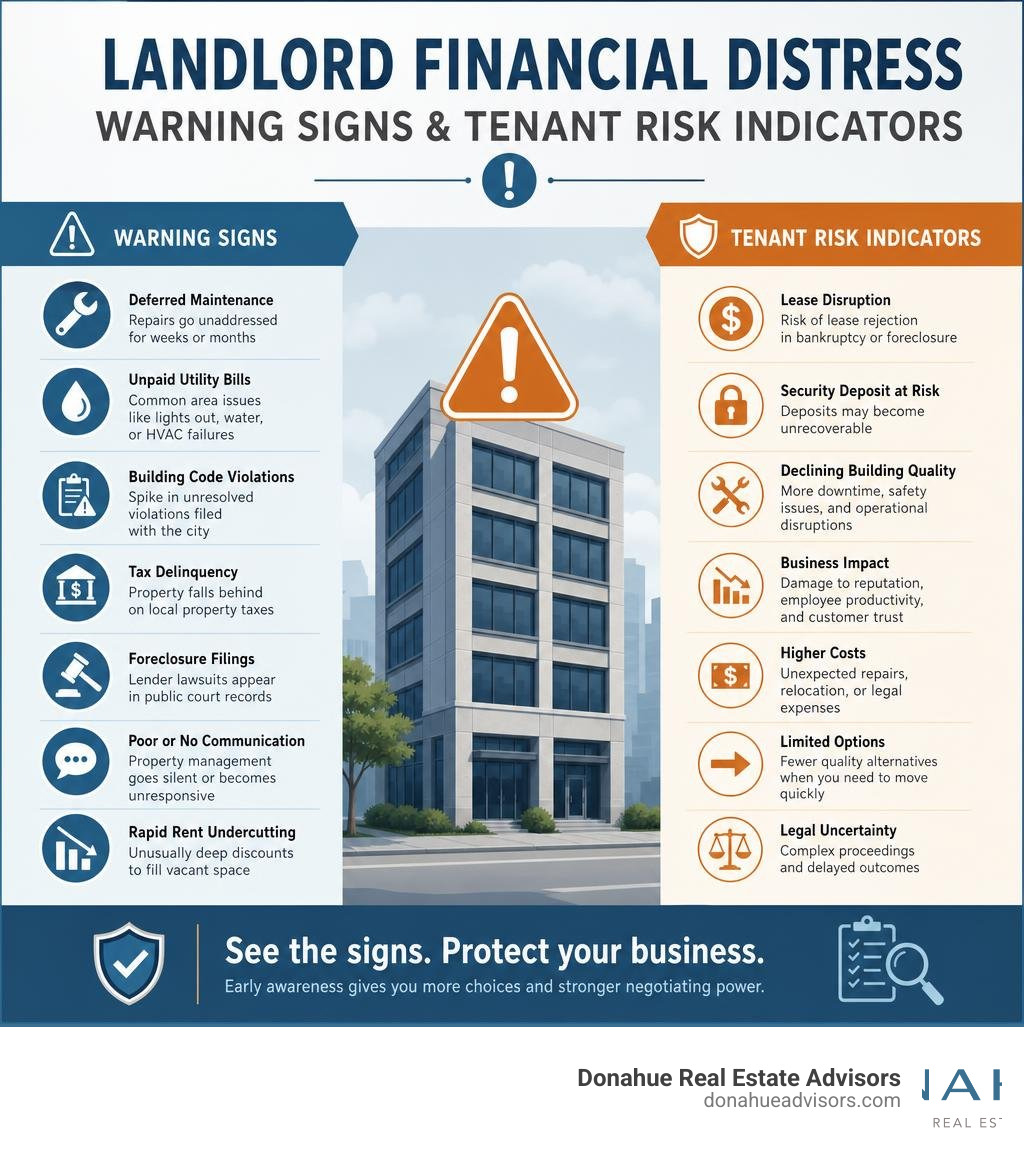
If you are asking is my landlord in financial distress, here are the most common warning signs to look for right now:
- Deferred maintenance: repairs go unaddressed for weeks or months
- Unpaid utility bills: common area lights out, water issues, HVAC failures
- Building code violations: a spike in unresolved violations filed with the city
- Tax delinquency: the property falls behind on local property taxes
- Foreclosure filings: lender lawsuits appear in public court records
- Poor or no communication: property management goes silent or becomes unresponsive
- Rapid rent undercutting: your landlord starts offering unusually deep discounts to fill vacant space
Any one of these signals can point to cash flow trouble. Multiple signals together are a serious red flag.
When a landlord is under financial pressure, the consequences for tenants can range from simple inconvenience to a full-blown bankruptcy or foreclosure proceeding that puts your lease, your security deposit, and your business operations at risk. Real-world cases like the Prana Investments portfolio collapse in New York City, where over 300 building violations piled up across a 550-unit portfolio as the owner defaulted on more than $56 million in loans, show exactly how quickly landlord financial distress translates into a crisis for tenants.
For Pittsburgh businesses, the stakes are especially high. A poorly structured lease in a building headed for receivership or bankruptcy can lock your company into years of uncertainty at exactly the wrong moment.
I’m Jack Donahue, SIOR, founder of Donahue Real Estate Advisors, and over more than three decades representing tenants across Pittsburgh’s commercial real estate market, I have helped businesses recognize the early warning signs of landlord financial distress and take strategic action before it disrupts their operations. The sections below walk you through exactly what to watch for, what your rights are, and what steps to take.
How to Determine if My Landlord is in Financial Distress
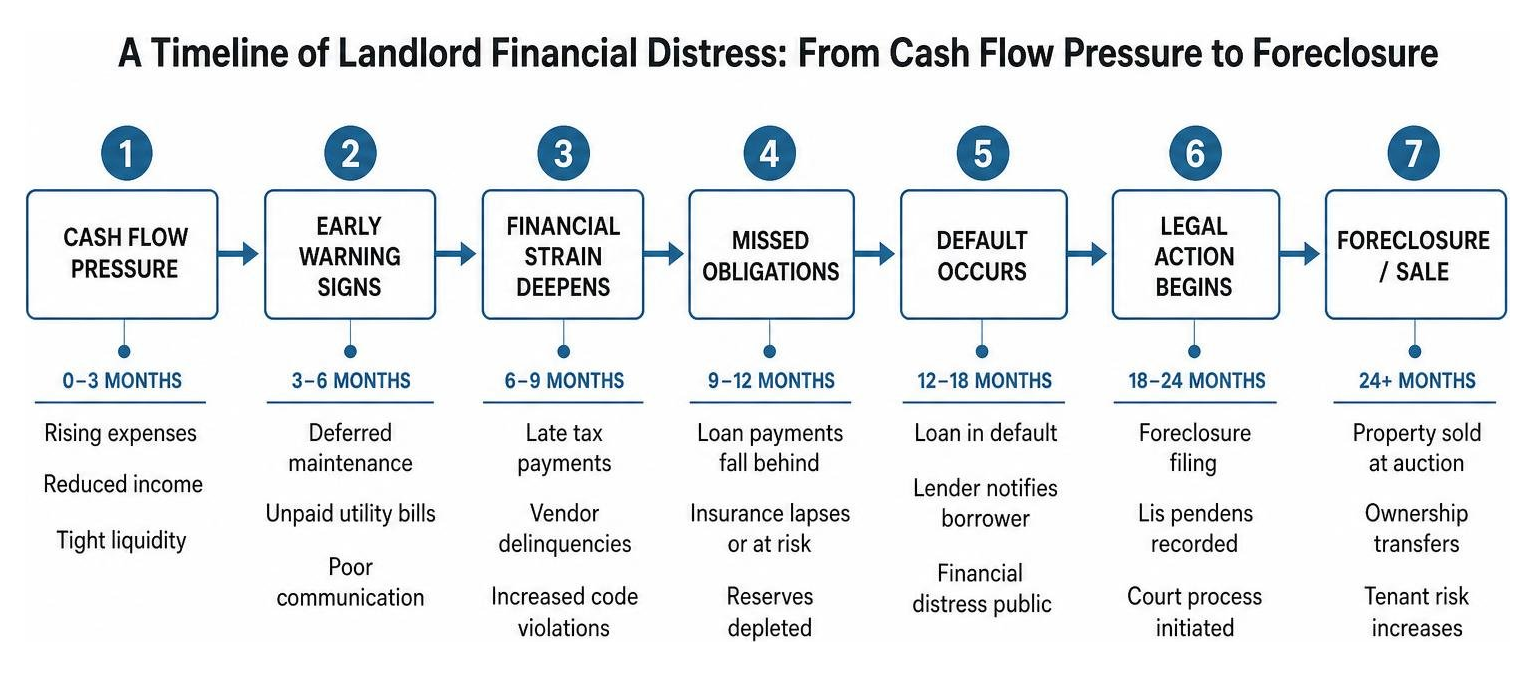
Identifying a landlord’s financial instability early gives you the runway needed to protect your business. Waiting for a formal foreclosure notice or bankruptcy filing is a lagging strategy. According to data from the Goliath Data 2026 Stress Signals report, property owners show behavioral distress signals 6 to 12 months before those issues ever appear in public tax delinquency or foreclosure records.
With U.S. property tax delinquency rates rising to 5.1% in 2025, up from 4.5% in 2024, and property taxes climbing 16% in 2024, commercial landlords are facing unprecedented cash flow pressure. By understanding both the physical and financial red flags, you can accurately assess your risk.
Physical and Operational Warning Signs
The physical condition of your office building is often the most immediate indicator of a landlord’s financial health. When cash is tight, maintenance is almost always the first budget item to be cut.
You might notice that routine cleaning services become less frequent, trash accumulates in common areas, or elevators remain out of service for extended periods. Landlords under severe stress may even neglect major structural issues.
If you are paying for Common Area Maintenance as part of your lease, you should expect these services to be handled promptly. A sudden drop in operational standards is a strong signal that your rent payments are being diverted to cover basic debt service rather than building operations.
Financial and Legal Red Flags
Beyond physical neglect, there are several legal and financial indicators that point to deep distress. Public records are a highly reliable tool for verifying these concerns.
- Tax Delinquencies: You can check local county real estate portal systems to see if property taxes are unpaid. Because tax delinquency can take 1 to 3 years to result in a public sale, any active delinquency indicates that cash flow has been constrained for a significant period.
- Foreclosure Filings: When a commercial mortgage goes into default, the lender will file a foreclosure lawsuit. This action is public record and can be tracked through local court registries.
- Receivership Actions: In many commercial defaults, the lender will ask the court to appoint a third party to manage the property. Understanding how Receivership works is critical, as it directly changes who you pay rent to and who is responsible for building operations.
- LLC Misconceptions: Many landlords hold properties in individual LLCs to protect personal assets. However, as discussed in this Accidental Landlord Foreclosure Risks analysis, these structures often fail to shield owners from personal liability due to personal guarantees, which can accelerate the collapse of their entire real estate portfolio.
Legal Protections and Tenant Rights in Foreclosure or Bankruptcy
If your landlord files for bankruptcy or loses the property to foreclosure, you may feel like you have lost control of your business home. However, federal and state laws provide specific protections to ensure commercial tenants are not simply thrown out on the street.
During major restructurings, such as the Pinnacle Group Bankruptcy Case where thousands of units and dozens of commercial properties were placed under court supervision, understanding your statutory rights is the key to maintaining operational continuity.
Understanding Section 365 and Lease Rejection Risks
When a landlord files for Chapter 11 bankruptcy, the Bankruptcy Code governs what happens to active leases. Under Section 365(a), the debtor landlord has the power to assume, assign, or reject leases of nonresidential real property, subject to court approval.
If the landlord chooses to assume your lease, they must cure any outstanding defaults and continue performing their obligations. If they assign the lease to a new owner, that new owner must provide adequate assurance of future performance.
If the landlord rejects your lease, it is treated as a breach of contract. However, Section 365(h) provides a vital shield for commercial tenants. Instead of being evicted, you can choose to remain in possession of the property for the remainder of your lease term, retaining your rights to use, assign, and sublet. The catch is that the bankrupt landlord is no longer obligated to provide services like utilities or maintenance. You may have to cover these costs directly and offset them against your rent payments. This is one of the most complex Commercial Lease Issues for Tenants and requires careful legal coordination.
Tenant Obligations Regarding Rent Payments During Landlord Distress
One of the most common mistakes tenants make when they suspect their landlord is in financial trouble is unilaterally withholding rent. This can put you in default and give the landlord, or a bankruptcy trustee, legal grounds to terminate your lease.
When a landlord files for bankruptcy, an automatic stay goes into effect. This halts all foreclosure and collection actions against the landlord, but it does not excuse you from your lease obligations. You must continue making your scheduled rent payments to the designated party, whether that is the landlord, a court-appointed receiver, or a bankruptcy trustee.
To ensure you are protecting your business and fulfilling your contractual duties, you must have a clear grasp of your lease terms. Taking the time to study and succeed in Understanding a Commercial Lease will prevent you from making costly procedural errors during a landlord’s financial crisis.
Strategic Steps for Pittsburgh Businesses Facing Landlord Instability

If you are a Pittsburgh business owner facing landlord instability, you need a proactive strategy. The decisions you make now will impact your overhead, your employee productivity, and your operational security for years to come.
Partner with Expert Tenant Representation
The very first step you should take is to partner with an expert tenant representative. When a building is in distress, the landlord, their lender, and their listing brokers will all look out for their own financial interests. You need a professional on your side who has zero conflicts of interest.
At Donahue Real Estate Advisors, we exclusively represent tenants. We do not represent landlords, and we do not manage buildings. This means our advice is 100% focused on your business goals. A dedicated tenant rep can audit your current lease, communicate with lenders or receivers on your behalf, and identify alternative spaces in the market if relocation becomes necessary. Utilizing expert commercial tenant representation ensures that you are never negotiating from a position of weakness.
Navigating the Decision: Office Lease Renewal vs. Relocation in Pittsburgh Submarkets
With elevated office vacancy rates across the region, Pittsburgh businesses have significant leverage in 2026. Submarkets like the East End, Shadyside, and East Liberty continue to show strong demand for premier spaces, while Oakland, the North Shore, the Southside, and the Strip District offer highly competitive opportunities for companies looking to relocate.
If your current landlord is struggling, you must carefully weigh the pros and cons of renewing your lease versus moving to a more stable property.
| Strategy | Advantages | Risks in a Distressed Building |
|---|---|---|
| Lease Renewal | No moving costs; minimal business disruption; potential for high tenant improvement allowances. | Landlord may default on funding your tenant improvements; building services may continue to decline. |
| Relocation | Fresh start in a financially stable building; modern amenities; potential for better lease terms. | Moving expenses; physical disruption; potential downtime during the transition. |
Before committing to a path, review our guide on office lease renewal and analyze the latest local market dynamics in our report on Pittsburgh vacancy rates to see where the best opportunities lie.
Avoiding Critical Mistakes: Free Rent Timing and Holdover Rent Risks
When negotiating a lease in a distressed market, two critical areas where tenants frequently make mistakes are free rent timing and holdover rent provisions.
Many businesses try to front-load their free rent period. However, if your landlord is financially unstable and goes into foreclosure early in your term, you could lose the benefit of that free rent or find yourself dealing with a new owner who refuses to honor verbal agreements. It is critical to structure concessions clearly within your commercial lease contract so they are legally binding on any future buyers or lenders.
Additionally, if you stay in your space past your lease expiration date without a signed renewal or extension, you enter “holdover” status. Holdover rent penalties in Pittsburgh commercial leases can easily jump to 150% or 200% of your previous monthly rent, creating a massive financial burden at a time when you need flexibility.
Frequently Asked Questions About Landlord Financial Distress
Is my landlord in financial distress and can I withhold rent for habitability issues?
In Pennsylvania, the right to withhold rent for habitability issues is highly regulated and primarily applies to residential tenancies. For commercial tenants, the lease agreement almost always governs maintenance responsibilities.
Unilaterally withholding rent because the landlord is failing to maintain the HVAC system or clean the common areas can put your business in default. If you are experiencing severe maintenance neglect, you must follow the strict dispute resolution and notice procedures outlined in your lease and consult local legal guidelines, such as the Pennsylvania Laws about Withholding Rent, before taking any action.
What happens to my security deposit if my landlord is in financial distress?
In a bankruptcy proceeding, your security deposit is at serious risk if it has been commingled with the landlord’s general operating funds. If the landlord does not have the cash to return your deposit at the end of your lease, you may find yourself classified as an unsecured creditor in bankruptcy court, meaning you will have to wait in line behind secured lenders to recover your money.
To protect yourself, ensure your lease requires the deposit to be held in a segregated, interest-bearing escrow account. Managing this risk is a fundamental part of maintaining a healthy landlord tenant relationship.
Are there any remaining COVID-19 rental assistance programs or protections in 2026?
No. All pandemic-era commercial and residential eviction moratoriums and emergency rental assistance programs have expired. For example, the state-level programs in California like the COVID-19 Tenant Relief Act and AB 832 are completely inactive, and local emergency orders in major cities ended years ago.
Conclusion
When you suspect your landlord is in financial distress, doing nothing is the riskiest path you can take. By recognizing the physical and financial warning signs early, understanding your rights under the Bankruptcy Code, and avoiding common negotiation mistakes, you can protect your business from sudden operational disruptions.
At Donahue Real Estate Advisors, we are committed to providing conflict-free, tenant-first representation to help Pittsburgh businesses navigate complex real estate challenges. Whether you are deciding between a lease renewal in your current building or relocating to a more stable property in submarkets like the Strip District, Oakland, or the North Shore, we are here to guide you every step of the way.
To see how we have successfully helped other regional businesses secure their long-term operational goals, read our case studies.
Ready to secure your business operations and evaluate your lease options? Contact us today to schedule a comprehensive lease strategy session.