

Step-by-Step Guide to Office Relocation Timeline
How Long Does It Really Take to Move an Office?
Understanding the timeline to move an office is the first step to avoiding costly delays, double rent, and operational chaos. Here is a quick answer:
| Office Size | Minimum Planning Time | Ideal Planning Time |
|---|---|---|
| Under 2,500 sq ft | 6–8 weeks | 10–12 weeks |
| 2,500–10,000 sq ft | 10–12 weeks | 16–20 weeks |
| 10,000–25,000 sq ft | 6+ months | 12+ months |
| 25,000+ sq ft | 12+ months | 18+ months |
These time frames are averages, and it will depend on the existing condition of the space.
For most mid-sized businesses in Pittsburgh, the full process from strategic planning through move day can run anywhere from 6 to 18 months. That includes tenant rep engagement, lease review, site search, negotiations, fit-out, IT setup, and the physical move itself.
Planning too late is the single most common reason office moves go over budget and over schedule. We once received a panicked call from a business with just 30 days left on their lease. That scenario almost always leads to poor decisions and unnecessary stress.
The Pittsburgh office market in 2026 adds another layer of complexity. Submarkets like the Strip District, East Liberty, and Oakland are seeing strong demand, which means quality spaces get leased quickly. Waiting too long to start your search narrows your options and weakens your negotiating position.
This guide breaks the entire relocation process into clear phases, with specific tasks, timelines, and decision points at each stage. Whether you are weighing a lease renewal or planning a full relocation, the steps ahead will help you move with confidence.
With over 30-plus years representing tenants across Pittsburgh’s commercial real estate market, Donahue Real Estate Advisors has guided businesses of all sizes through every phase of the timeline to move an office, from initial lease review through move-in day. As conflict-free tenant representatives, our focus is entirely on your outcome, not the landlord’s.
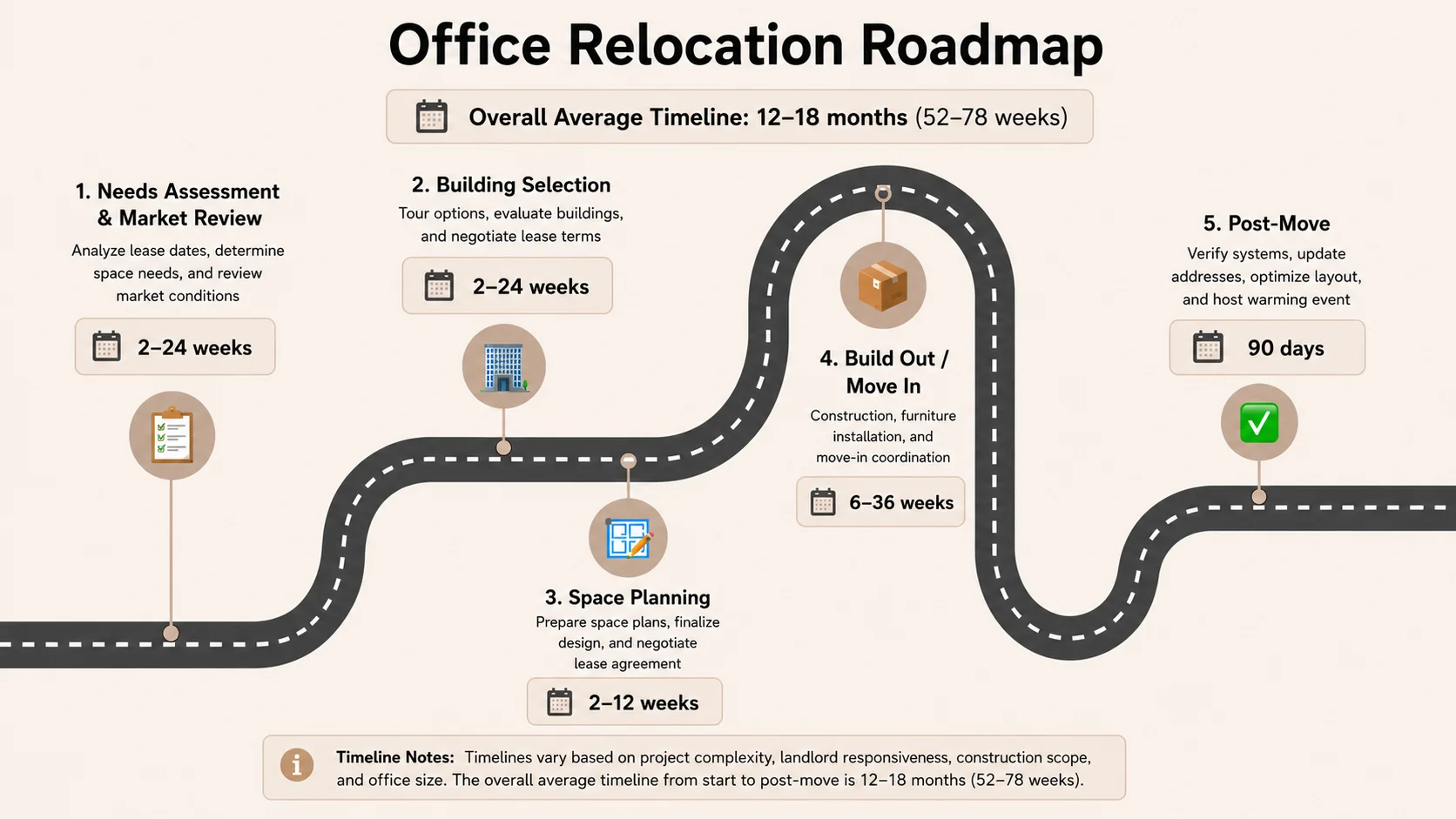
Phase 1: Strategic Planning and Market Analysis

The first phase of your timeline to move an office is all about data and decisions. Before you look at a single floor plan, you must understand your current obligations and future needs. We recommend starting this process at least a year before your current lease expires.
The first step is a deep dive into your existing contract. You need to identify your “drop-dead” dates for giving notice. Missing a window to renew commercial lease or failing to provide proper notice for the end of commercial lease can result in expensive holdover penalties or automatic extensions you didn’t want. To help you track these milestones, we’ve created The Ultimate Guide to Key Commercial Lease Dates.
Factors Influencing Your Timeline to Move an Office
Several variables can stretch or compress your schedule. In May 2026, the Pittsburgh market is seeing a push toward high-quality Class A spaces in tech-heavy neighborhoods.
- Space Size: A 2,000-square-foot office in Shadyside might be ready in weeks, but a 20,000-square-foot headquarters in the Strip District requires months of planning.
- Market Availability: According to 2026 CoStar statistics, vacancy rates in prime Pittsburgh submarkets like the North Shore and East Liberty remain tight for premium space. If you need a specific location, you must start earlier.
- Internal Approval: Large organizations often have a linear approval process. If every decision needs to go through a board or a headquarters in another city, add at least 4–8 weeks to your timeline.
- Hybrid Work Models: Modern offices are no longer just rows of desks. Deciding on your desk-to-employee ratio (often 0.6:1 or 0.7:1 for hybrid teams) is a critical part of the tenant rep process. Before searching, ask yourself: How Much Office Space Do I Need?
Assembling the Relocation Committee
You shouldn’t manage a move alone. A successful timeline to move an office depends on a well-structured committee. Each member should have a defined role:
- Project Manager: The “air traffic controller” who owns the master schedule.
- IT Lead: The most critical role for business continuity. They manage the “critical path” of internet and server migration.
- Finance Lead: Manages the budget and ensures 2026 inflation adjustments are accounted for.
- Department Coordinators: Representatives from HR, Operations, and Sales to ensure everyone’s needs are met.
- Executive Sponsor: To provide final sign-off and high-level support.
By engaging a conflict-free tenant representative early, you gain a strategic advisor who ensures your committee isn’t swayed by landlord-biased information. This is especially vital when navigating the question of How Long Does It Take to Find Office Space?
Phase 2: Site Selection and Lease Negotiations
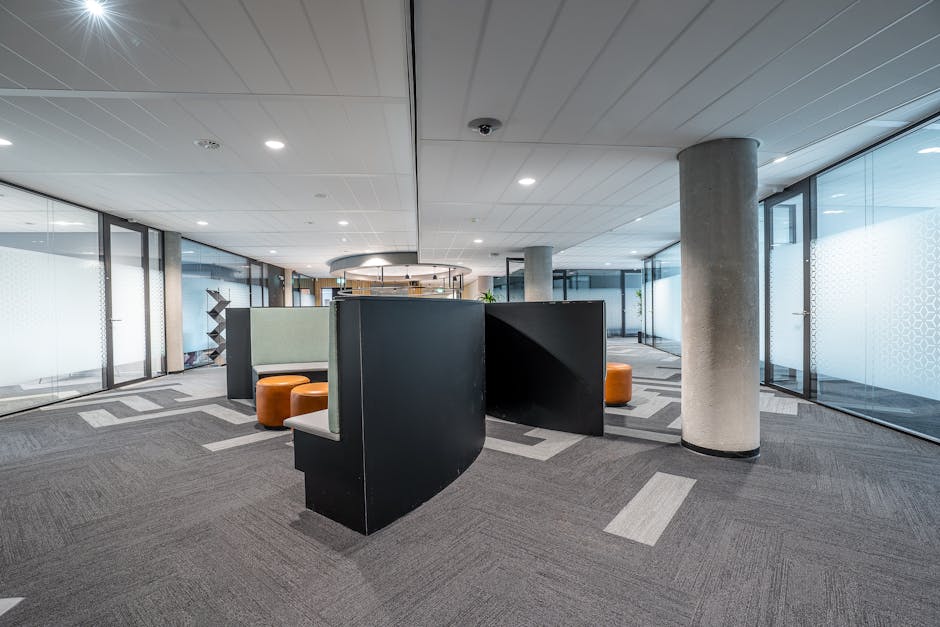
Once you have your requirements, it’s time to hit the pavement. This phase involves touring properties, comparing submarkets, and negotiating the financial terms that will define your next several years.
Evaluating Pittsburgh Submarkets
In 2026, Pittsburgh’s neighborhoods offer vastly different vibes and price points.
- Strip District: The hub of the “Robotics Row.” It offers growth potential but commands premium rents.
- Oakland: Perfect for tech and life sciences due to proximity to Pitt and CMU, though parking can be a challenge.
- East Liberty and Shadyside: High walkability scores and excellent amenities like Whole Foods and local boutiques make these favorites for talent attraction.
- North Shore and Southside: These areas offer “industrial chic” options and great riverfront access, often at a slightly more competitive rate than the CBD.
Finalizing the Agreement
When you find the right space, the negotiation begins. This isn’t just about rent; it’s about the “fit-out” or Tenant Improvements (TI). In 2026, construction lead times for custom office builds can take 2 to 9 months depending on complexity.
We always recommend a thorough commercial lease review to look for hidden costs. One often-overlooked item is the restoration clause. This requires you to return your old office to its original “shell” condition. Research shows that decommissioning costs can be 3 to 5 times the cost of the physical move itself.
To help you choose the right path, consider how different office types impact your timeline to move an office:
| Office Type | Planning & Search | Legal & Negotiation | Fit-out / Setup | Total Timeline |
|---|---|---|---|---|
| Serviced Office | 1–2 weeks | 1 week | 24–48 hours | Under 1 month |
| Managed Office | 4–8 weeks | 2–4 weeks | 4–8 weeks | 3–4 months |
| Traditional Lease | 12–24 weeks | 4–8 weeks | 8–24 weeks | 6–12 months |
Phase 3: IT Infrastructure and Operational Setup
If there is one thing that can completely derail your timeline to move an office, it is the IT setup. While moving furniture is a weekend task, moving your digital backbone takes months of lead time.
Managing the IT Timeline to Move an Office
You should order your internet circuits the same day you sign your new lease. In 2026, Internet Service Provider (ISP) lead times remain a bottleneck.
- On-net buildings: 30–60 days for installation.
- Off-net buildings: 90 days or more if fiber needs to be run to the building.
We suggest using an office move timeline planner to track these technical milestones. Ensure your IT lead conducts a Wi-Fi site survey in the new space before walls go up. This ensures you don’t have “dead zones” in your new conference rooms. For a deeper look at tech integration, see How to Move an Office: Timeline, Costs & Hybrid Workspace Setup (2026).
Vendor Coordination and Logistics
By the two-month mark, you should have your moving company locked in. Request quotes from at least three licensed commercial movers and ensure they provide a Certificate of Insurance (COI). Most Class A buildings in Pittsburgh will not let a mover onto the property without one.
Other logistical “musts” include:
- Furniture Disposition: Decide what is being moved, sold, or donated.
- Freight Elevators: Reserve these early. In busy buildings, Friday evening and Saturday slots fill up months in advance.
- Employee Communication: Send out a one-page FAQ. People get nervous about change; tell them where they will sit, where the coffee is, and how the new commute looks.
Avoiding Common Pitfalls in Your Timeline to Move an Office
Even the best-laid plans can hit snags. The key to a “stress-free” move is anticipating where things usually go wrong. For a comprehensive list, you can check out our Free Download: The Office Move Playbook.
1. Underestimating Costs Direct moving costs are just the tip of the iceberg. Between IT migration, new furniture, legal fees, and decommissioning your old space, costs add up fast. We recommend a 15–20% contingency budget to handle 2026 inflation and surprise repairs required by your old landlord.
2. The “Decommissioning” Trap As mentioned earlier, many leases require you to remove all cabling and partitions when you leave. If you don’t budget for this, you could face a six-figure bill you didn’t see coming.
Minimizing Business Downtime
The goal is to leave the old office Friday afternoon and be fully operational Monday morning.
- Phased Moves: For larger Pittsburgh companies, moving department by department over several weekends can keep the lights on.
- The “Monday Morning Essentials” Kit: Don’t let your team arrive to an office with no coffee, soap, or toilet paper. Have a designated box for kitchen and restroom essentials that is the first to be unpacked.
- IT Dry Run: Perform a full system test on Sunday. Don’t wait until 8:00 AM Monday to realize the phones aren’t routing correctly.
Post-Move Optimization and Adjustments
The timeline to move an office doesn’t end on move day. The first 90 days are for “settling in.”
- Days 1–7: Focus on IT troubleshooting and workstation comfort.
- Days 30–60: Update your Google Business Profile, USPS address, and client notifications.
- Days 60–90: Evaluate how the space is actually being used. Are the “neighborhoods” working? Is the hybrid schedule sticking? This is the time to adjust furniture layouts or meeting room tech.
Frequently Asked Questions about Office Relocation
How long does it typically take to move a medium-sized office in Pittsburgh?
For an office between 5,000 and 10,000 square feet, companies should typically plan for a 10- to 18-month timeline from initial planning to occupancy. This generally includes needs assessment and market review, building selection and term sheet negotiation, space planning and lease negotiation, and the build-out and move-in process. Exact timelines will vary based on market conditions, landlord responsiveness, permitting requirements, and the complexity of the build-out.
When is the latest I should order internet service for the new space?
You should order internet service at least 90 days before your move. While some buildings are “pre-wired,” delays in circuit provisioning are the most common cause of post-move downtime. Ideally, your internet should be active and tested five business days before the movers arrive.
What are the primary differences between moving to a serviced office versus a traditional lease?
A serviced office (like a coworking space) is “plug-and-play,” meaning you can often move in within 24-48 hours of signing. A traditional lease offers more customization and lower long-term costs but requires a 6-12 month lead time for search, legal review, and construction.
Conclusion
Relocating your business is a monumental task, but it is also an opportunity to reset your culture and optimize your operations. At Donahue Real Estate Advisors, we pride ourselves on being conflict-free tenant representatives in Pittsburgh. We don’t work for landlords, so our advice is never compromised.
Whether you are looking for a high-tech hub in the East End or considering a strategic lease renewal, we have the local expertise to guide you. Our work with firms like Nelson Mullins shows how we can manage both immediate needs and long-term goals—check out our Nelson Mullins Temporary Space Case Study and Nelson Mullins Long-Term Space Case Study for real-world examples.
Ready to take the next step in your timeline to move an office? Don’t wait until the 30-day panic sets in. Schedule a lease review with us today, or explore Pittsburgh tech office space to see what’s available in the 2026 market. We are here to ensure your next move is your best move.